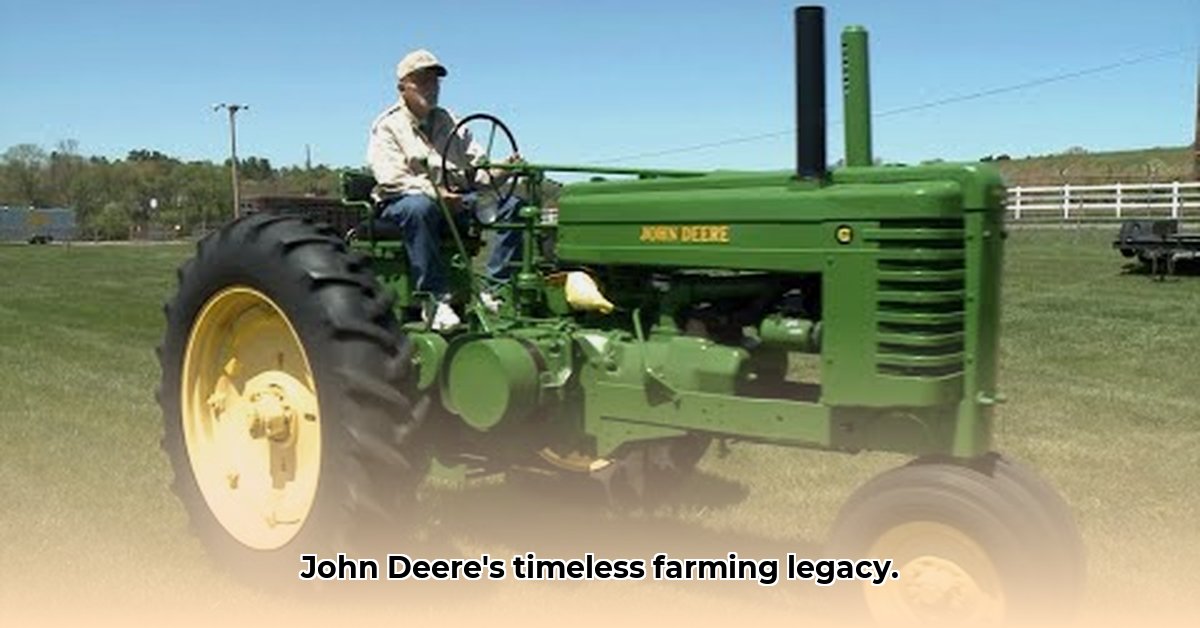
The rumble of a vintage John Deere tractor evokes images of simpler times and hardworking farmers. But these iconic machines are more than nostalgic symbols; they represent a transformative period in agricultural history, deeply intertwined with the ongoing conversation about sustainable farming practices. This article explores their legacy, examining how these workhorses shaped both farming and the environment. For a list of models, see John Deere models.
The Early Days: Steel Wheels and Gasoline Dreams
Imagine the backbreaking toil of tilling acres with horse-drawn plows—a slow, laborious process. Early John Deere tractors, often featuring steel wheels and gasoline engines, revolutionized this. Farmers could cultivate far more land daily, dramatically boosting efficiency. This marked a giant leap forward in productivity, but it also initiated a crucial dialogue about sustainability. Did this enhanced efficiency come at a cost to the land? Were long-term environmental consequences fully considered? These questions remain vital. While revolutionary, the early machines likely had a significant environmental footprint concerning fuel consumption and manufacturing. Further research is needed to accurately quantify their impact on soil health.
The impact expanded beyond the fields. These early tractors transformed farming communities, enabling farmers to cultivate larger areas and produce more food. This transition, however, also led to changes in rural lifestyles and economic structures—some positive, some negative. Farm consolidation and potential displacement of agricultural workers were consequences. The transition wasn't solely technological; it was a socio-economic shift as well. Were these changes ultimately beneficial, or did they create unforeseen negative externalities?
Diesel Power and Rubber Tires: A Technological Shift
The adoption of diesel engines marked a turning point. Models such as the John Deere Model R showcased diesel's advantages—improved fuel efficiency and greater power. However, this wasn't an unqualified environmental victory. Despite their fuel efficiency compared to gasoline counterparts, diesel engines still produced emissions. The increased farming scale enabled by these tractors may have offset some fuel-efficiency gains. More land under cultivation potentially meant more overall emissions and environmental disruption. How can we reconcile these trade-offs?
The introduction of rubber tires was another significant advancement. They improved traction, reduced soil compaction, and simplified land cultivation. Yet, the manufacturing and disposal of these tires present their own environmental challenges. The lifecycle of a tire—from raw materials to production to eventual disposal—poses environmental concerns. The longevity of these tires is also a factor. Research suggests that tire technology has improved over time, leading to more environmentally friendly options for newer tractors. This positive development, however, doesn't apply to older models.
The Model D, renowned for its durability and longevity, is legendary. Its exceptionally long production run raises questions about the resource consumption involved in its manufacture. Millions of these machines demanded vast quantities of raw materials and energy. Research into the environmental impact of this scale of production is ongoing. What are the hidden costs of mass production?
Sustainability and the Legacy of the Old John Deere
How do we balance the undisputed productivity gains of these tractors with their potential negative environmental effects? Modern advancements, such as precision farming techniques, offer a part of the answer. While not directly applicable to older models, these techniques highlight possibilities for enhancing sustainability. Precision farming—GPS-guided planting and targeted fertilizer application—could minimize the environmental footprint of older tractors if integrated. Further research is needed to assess the feasibility of retrofitting some of these technologies. However, the potential for improvement is clearly present. How can we adapt modern practices to improve the legacy of these older machines?
The history of the old John Deere tractor is more than a mechanical innovation chronicle; it reflects our evolving understanding of environmental responsibility. This history urges us to consider: how can we blend technological progress with a deep commitment to environmental sustainability, learning from both successes and shortcomings to create a truly sustainable agricultural future?
Looking Ahead: Lessons Learned and Future Directions
Modern John Deere tractors boast an array of sustainability features. Although irrelevant to older models, they offer valuable insights into ongoing advancements. Increased fuel efficiency, emission reduction technologies, and the use of telematics for optimized resource management are significant strides. These newer models, while vastly different from their predecessors, highlight the continuous push towards environmentally friendly agricultural methods. What innovations can be adapted for older machinery?
Key Takeaways:
- Early John Deere tractors increased efficiency but also raised concerns about soil erosion.
- The shift to diesel power enhanced tillage intensity, potentially leading to compaction.
- Modern precision agriculture enables targeted tillage, reducing soil disturbance and improving soil health.
- Different tillage methods yield different results and demand careful consideration.
- John Deere's commitment to sustainability is reflected in its development of precision tillage equipment.